
Hard Water in Lubbock — How It’s Destroying Your Appliances
Lubbock has hard water. This is not a secret to anyone who has lived here for more than a month — you can see it on your showerhead, your faucets, and the white film on your dishes. But what most people do not realize is how much damage that hard water is doing inside their appliances, where you cannot see it until something breaks.
How Hard Is Lubbock’s Water?
The City of Lubbock’s water tests at approximately 12.5 grains per gallon (GPG), which is about 214 parts per million (ppm). For context, the Water Quality Association classifies anything over 10.5 GPG as “very hard.” Lubbock is well into that territory.
The total dissolved solids (TDS) in Lubbock water run around 800 ppm — roughly double the national average. This comes from the Ogallala Aquifer, where groundwater has been filtering through limestone, chalk, and gypsum formations for thousands of years. Those minerals — primarily calcium and magnesium — are what make Lubbock water so hard.
These numbers come from the City of Lubbock water quality report. Actual hardness can vary by neighborhood and whether you’re on city water or a well.
The city’s water meets all regulatory standards for safety. The hardness is not a health issue — it is an appliance and plumbing issue.
Ice Makers and Ice Machines — The #1 Casualty
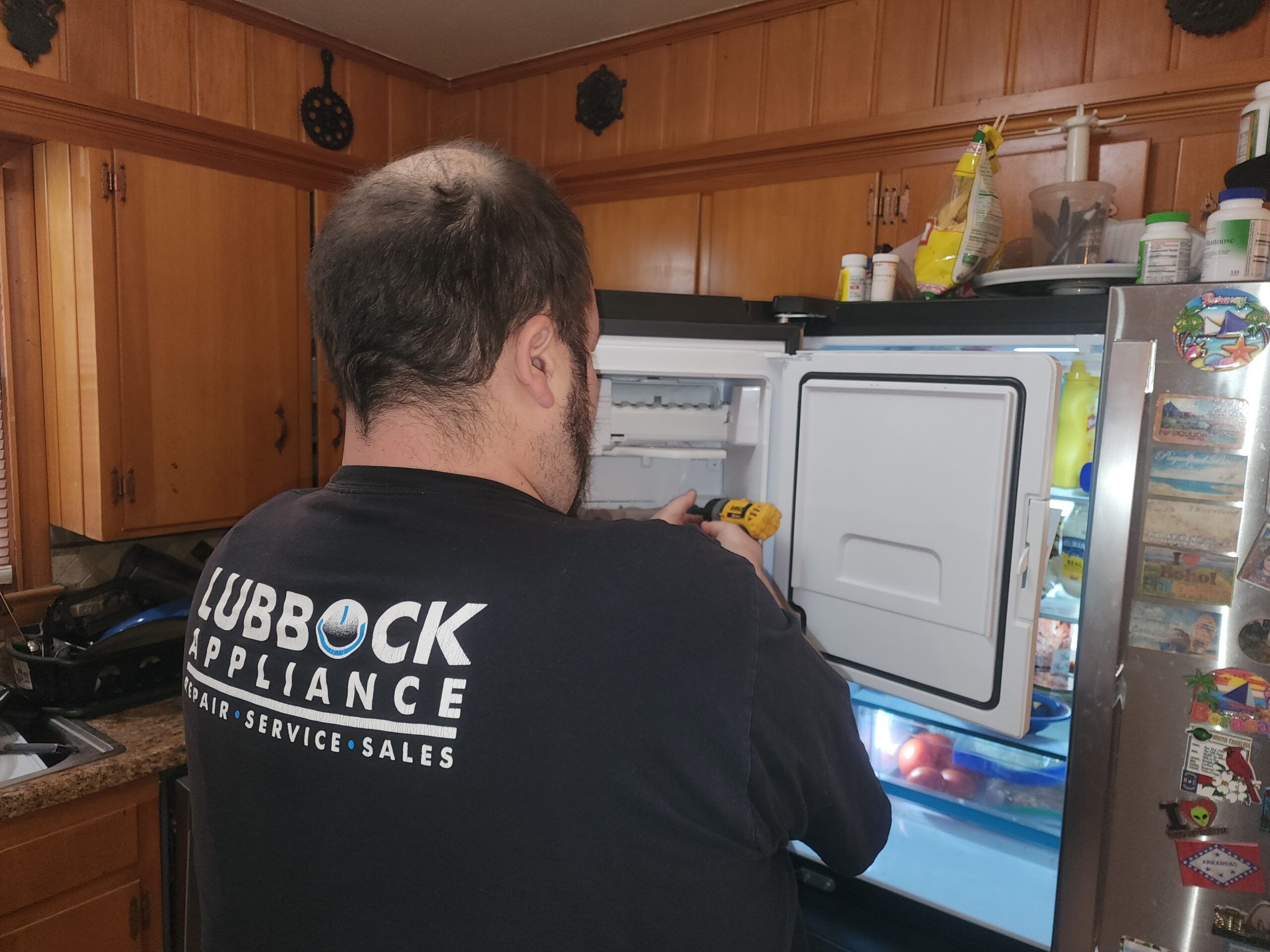
Ice makers and ice machines are the big one. Standard filters don’t catch the minerals either. I don’t think even RO gets all of it.
Here is what happens: calcium and magnesium deposits build up on the water inlet valve, the fill tube, and inside the ice mold itself. Over time, the fill tube restricts or clogs entirely. The water inlet valve cannot fully open or close. The ice mold gets coated with mineral scale that prevents ice from releasing cleanly.
On built-in refrigerator ice makers, this looks like: smaller ice cubes, hollow ice, ice that sticks together in clumps, the ice maker cycling but not producing, or ice that tastes and smells off. On standalone ice machines (common in Lubbock restaurants and businesses), scale buildup reduces production capacity and eventually causes the machine to fault out.
The standard refrigerator water filter — the one you replace every 6 months — is designed to filter sediment, chlorine, and certain contaminants. It is not designed to remove dissolved minerals. A filter that says “reduces hardness” may help marginally, but it will not solve the problem in water as hard as Lubbock’s.
Reverse osmosis helps, but it’s not specifically designed to remove soluble minerals like calcium and magnesium — that’s what a water softener does. RO will reduce mineral content, but if your goal is protecting appliances from scale buildup, a softener is the more direct solution.
Dishwashers — Scale, Film, and Drain Issues
Hard water affects dishwashers in three ways:
White film on dishes and glassware: This is mineral deposit, not soap residue. No amount of rinse aid will fully prevent it in Lubbock water. Using a dishwasher cleaner monthly (citric acid based) helps dissolve buildup inside the machine, but the film on dishes is an ongoing battle.
Spray arm clogging: The small holes in the spray arms gradually clog with mineral deposits. Water pressure drops, dishes do not get clean, and the homeowner blames the dishwasher when the real problem is the water.
Heating element scale: The heating element at the bottom of the dishwasher tub accumulates mineral scale that reduces its efficiency. It takes longer to heat water, which extends cycle times and increases energy usage.
Tip: soak your spray arms in white vinegar for 30 minutes every few months to dissolve mineral buildup in the nozzles. This alone can dramatically improve cleaning performance.
Washing Machines — Inlet Valves and Residue
Hard water mineral deposits accumulate on the inlet screen filters (the small mesh screens inside the water supply connections at the back of the washer), the water inlet valve itself, and inside the drum and outer tub.
If you’re on a well, checking your washer inlet screens periodically is a good idea. On city water, it’s generally not necessary unless you’ve had major plumbing work done recently that could have loosened sediment in the pipes.
Over time, mineral scale also builds up on the water inlet valve solenoids. The valve cannot fully open (slow fill) or cannot fully close (washer overfills or drips water when off). Valve replacement is a straightforward repair, but the root cause is the water chemistry.
Water Heaters — Efficiency and Lifespan
While we do not service water heaters, the impact of Lubbock’s hard water on water heaters directly affects every appliance connected to a hot water line — dishwashers, washing machines, and any appliance with a hot water inlet.
Research shows water heaters operating at 12.5 GPG hardness lose approximately 29% efficiency due to mineral scale buildup on heating elements and tank walls. That translates to $200–$350 per year in extra energy costs, and significantly reduced water heater lifespan.
When the water heater is scaled up, the hot water feeding your dishwasher and washing machine is not as hot as it should be — which affects cleaning performance and can extend cycle times.
What You Can Do About It
Whole-house water softener: A whole-house water softener has real benefits for appliance longevity — and for everything else in the house. Less soap and detergent needed, less scale buildup in water heaters and dishwashers, even softer skin. It’s not required, but if you’re dealing with constant hard water issues in your appliances, it’s worth looking into.
Monthly appliance descaling: Run your dishwasher empty with a citric acid cleaner or a cup of white vinegar. Run your washer’s Tub Clean cycle monthly. Clean your ice maker per the manufacturer’s instructions (usually involves a vinegar or commercial ice maker cleaner solution).
Consider an inline filter for your ice maker: A dedicated inline filter on the water line feeding your refrigerator can help reduce (not eliminate) mineral buildup in the ice maker. Look for filters rated for scale reduction, not just sediment and chlorine.
When Hard Water Damage Needs a Repair
If your ice maker has stopped producing, your dishwasher is leaving white film on everything, or your washer fills slowly or not at all — the hard water has likely already caused component failure. We see these repairs daily in Lubbock. The good news is most hard-water-related repairs are straightforward: inlet valves, fill tubes, ice maker assemblies, and heating elements.
Refrigerator repair | Dishwasher repair | Washer repair | Request a repair
Frequently Asked Questions
Q: How hard is Lubbock’s water?
A: 12.5 GPG (about 214 ppm) — classified as “very hard.” TDS is about 800 ppm, double the national average. These numbers come from the City of Lubbock water quality report and can vary by neighborhood.
Q: Will a water filter fix hard water problems in my appliances?
A: Standard filters remove sediment and chlorine, not dissolved minerals. A whole-house water softener is the most effective solution. RO helps reduce mineral content but a softener is the more direct approach.
Q: How often should I clean my appliances because of hard water?
A: Monthly dishwasher descaling, monthly washer tub clean, ice maker cleaning every 3-6 months. Check washer inlet screens periodically if you’re on well water.
Q: Can hard water damage my ice maker?
A: Yes. Ice makers are the appliance most affected by hard water in Lubbock. Mineral deposits clog fill tubes, coat ice molds, and damage inlet valves.
Hard water damage to your appliances? Request a repair or call (806) 730-6300.