Appliance Repair vs. Replace — When Does It Make Sense?
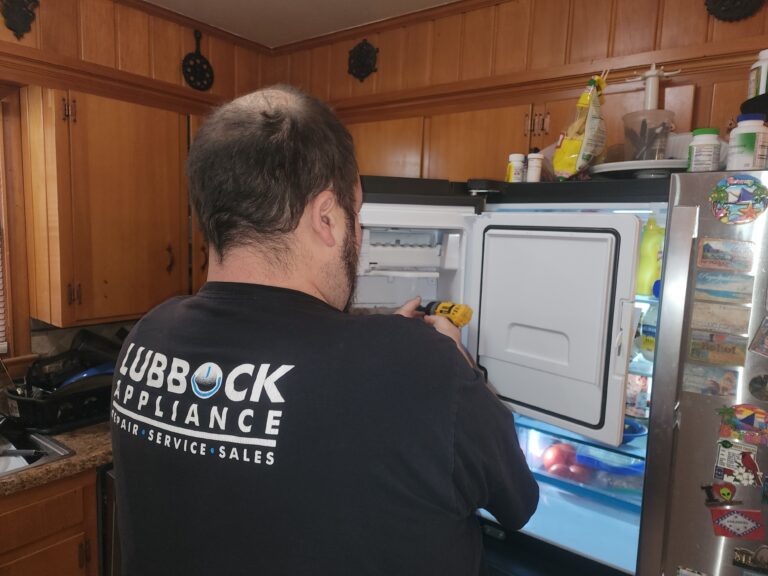
This is the question I get on almost every service call. The dishwasher quit, the dryer is making a noise, the fridge is not cooling — and the homeowner wants to know: should I fix this thing or just buy a new one?
There is no single right answer. But after years of repairing appliances in Lubbock, I can tell you the factors that actually matter — and the ones that don’t.
The 50% Rule — With a Big Caveat
The standard advice is this: if the repair costs more than 50% of the price of a comparable new appliance, replace it. That is a decent starting point. A $400 repair on a $600 washing machine probably does not make sense. A $200 repair on a $1,800 refrigerator almost always does.
But the 50% rule misses something important: it only compares the repair cost to the sticker price of a new unit. It does not account for delivery fees, installation costs, disposal of the old unit, potential modifications to your kitchen or laundry room (new water lines, electrical, venting), or the time you spend shopping and waiting for delivery. A “$900 replacement” can easily become a $1,200+ project once you add everything up.
The Matching Set Problem
When it comes to washers or dryers, it depends on whether they can replace the unit without replacing the matching unit. Happy wife, happy life. If they care about a matching set and they can’t find a similar replacement, they’ll need to buy the matching piece too — and that changes the repair/replace conversation drastically.
A $300 dryer repair looks expensive until you realize the alternative is a $1,800 matched washer-dryer set because your model was discontinued three years ago. Suddenly that repair is a bargain.
When Older Machines Are Worth Keeping
On some older machines that were built to last, I’ll tell customers to keep repairing them because they don’t build them like that anymore. The newer units prioritize features and price over durability.
A Maytag washer from 2005 with a belt drive transmission is a simpler, more durable machine than most of what you will find on the showroom floor today. Speed Queen is one of the few brands still building washers and dryers to commercial standards — and that is exactly why laundromats do not use Samsung or LG.
If you have an older appliance that was well-made and has been reliable for 10-15 years, a $200-300 repair can easily buy you another 5-8 years. Try getting that kind of lifespan out of a new $600 washer.
Expected Lifespans by Appliance
According to the National Association of Home Builders (NAHB) and industry data:
- Refrigerator: 10–13 years (top-freezer models tend to outlast French door units with ice makers)
- Washing Machine: 10–12 years (top-load with agitator typically lasts longer than front-load)
- Dryer: 10–13 years (simpler machines with fewer electronics last longest)
- Dishwasher: 9–10 years (the most common appliance to replace rather than repair due to lower cost)
- Oven/Range: 13–15 years (gas ranges tend to outlast electric; fewer electronics = fewer failures)
These are industry averages based on national data. In our experience in Lubbock, with the hard water and dust we deal with, many units start having issues earlier than that — especially ice makers and anything with water inlet valves. A well-maintained appliance can exceed these numbers. A poorly maintained one can fall well short.
Sealed System Repairs — It Depends on the Refrigerator
Whether a sealed system repair is worth it depends on the cost and quality of the refrigerator. On a Sub-Zero, Viking, Monogram, or any built-in unit, a sealed system repair is almost always worth it regardless of age — these are $5,000-$15,000+ refrigerators. On a standard consumer fridge, it depends on the repair cost vs replacement cost. We’ll give you an honest assessment.
Hidden Costs of Replacement People Forget
- Delivery and installation fees ($75–$200)
- Haul-away of old unit ($25–$75 if not included)
- New water supply lines, drain hoses, or power cords (often not included with new appliances)
- Potential cabinet or countertop modifications if the new unit is a different size
- Time off work to be home for delivery
- The 2–6 week wait if the model you want is not in stock
- Learning curve on a new machine with different controls and cycles
When Replacement Actually Makes Sense
- The repair cost exceeds 50% of a new unit AND the appliance is past its expected lifespan
- You have had 2-3 different repairs in the last 18 months (components are aging out together)
- The main board and motor both need replacement on a washer or dryer (stacking major repairs)
- The unit has been recalled or has a known chronic defect with no manufacturer coverage
Our Approach: We Tell You the Truth
We’re a repair-first company. We will occasionally sell a Speed Queen to long-time customers, but appliance sales isn’t our primary business. That means our repair-vs-replace advice is based solely on what makes financial sense for you — not on a sales commission.
Every repair where a part is replaced comes with a 365-day warranty. That is our way of saying we stand behind the work. If the repair makes sense and we do it, it stays fixed.
Request a repair or call (806) 730-6300 — we will give you an honest assessment before any work begins.
Frequently Asked Questions
Q: Is it worth repairing an old appliance?
A: It depends on the appliance, the repair cost, and replacement cost. Many older, well-built machines are worth repairing because they are more durable than current models.
Q: How do I know if my appliance is too old to repair?
A: Age alone is not the deciding factor. Repair frequency matters more — multiple repairs in 18 months on an aging unit means components are wearing out together.
Q: Do you sell appliances?
A: We are a repair-first company. We occasionally sell Speed Queen units to long-time customers, but appliance sales is not our primary business.
Q: What warranty do you offer on repairs?
A: 365-day warranty on every repair where a part is replaced — part and labor.
Not sure whether to repair or replace? Request a repair or call (806) 730-6300 for an honest assessment.