
Dryer Vent Cleaning in Lubbock, TX
Is your dryer taking too long even after vent cleaning? See our guide on other common causes of slow drying.
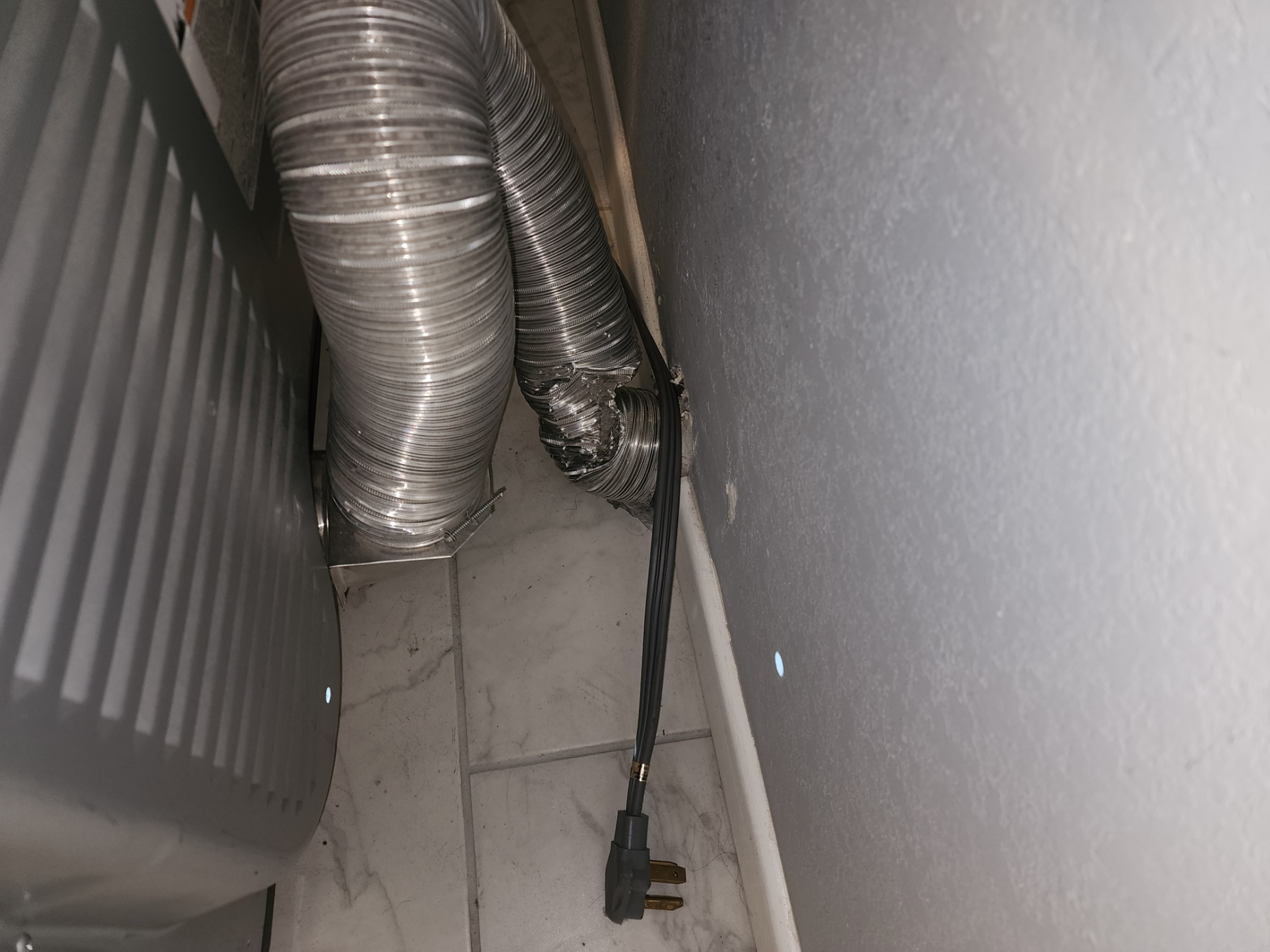
A clogged dryer vent doesn't announce itself -- it just makes your dryer work harder, run longer, and wear out faster. Lubbock Appliance Repair provides professional dryer vent cleaning in Lubbock with a systematic process, proper equipment, and a camera inspection so you can see the results. We don't rely on scare tactics -- we do the job right.
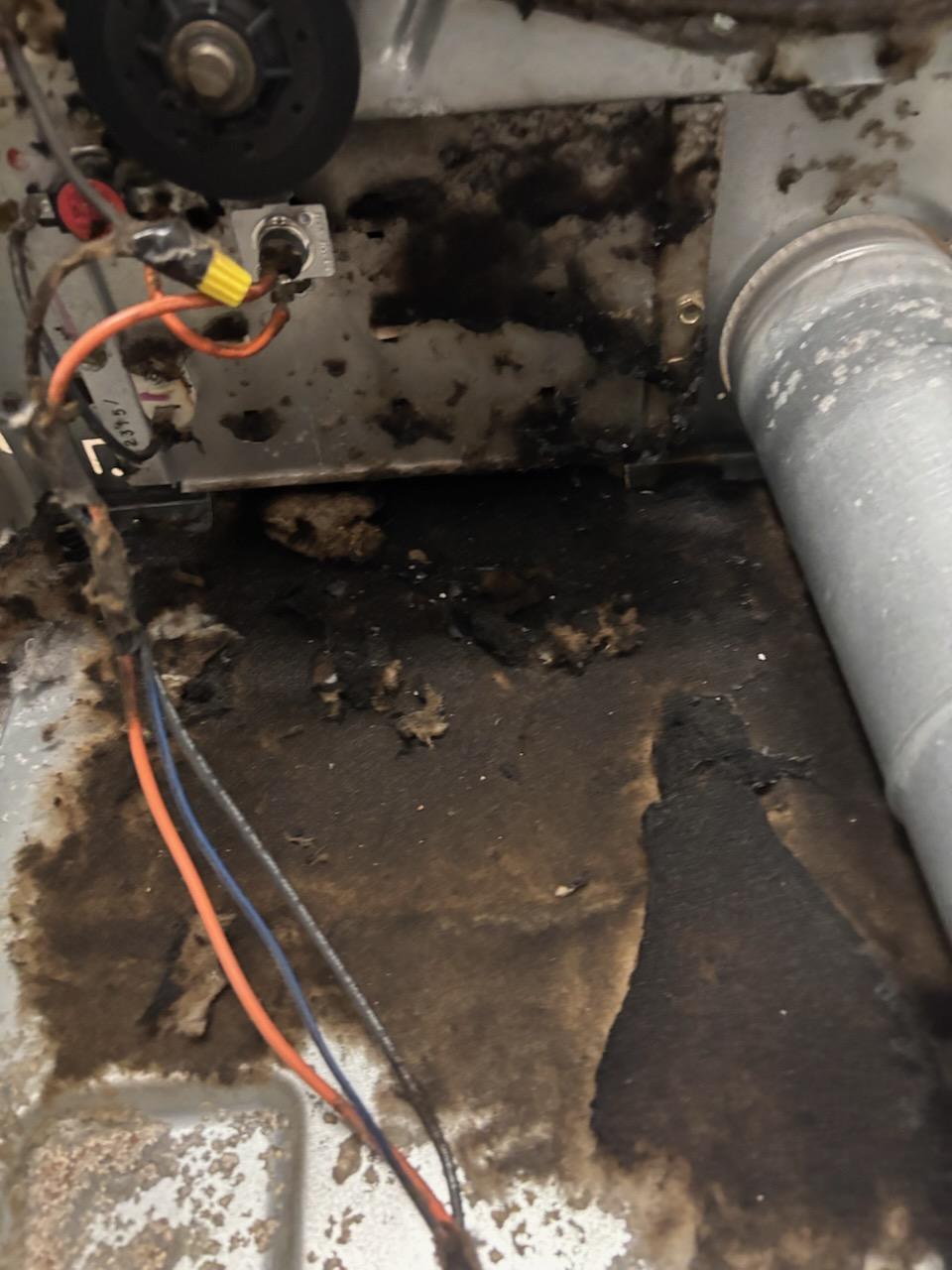
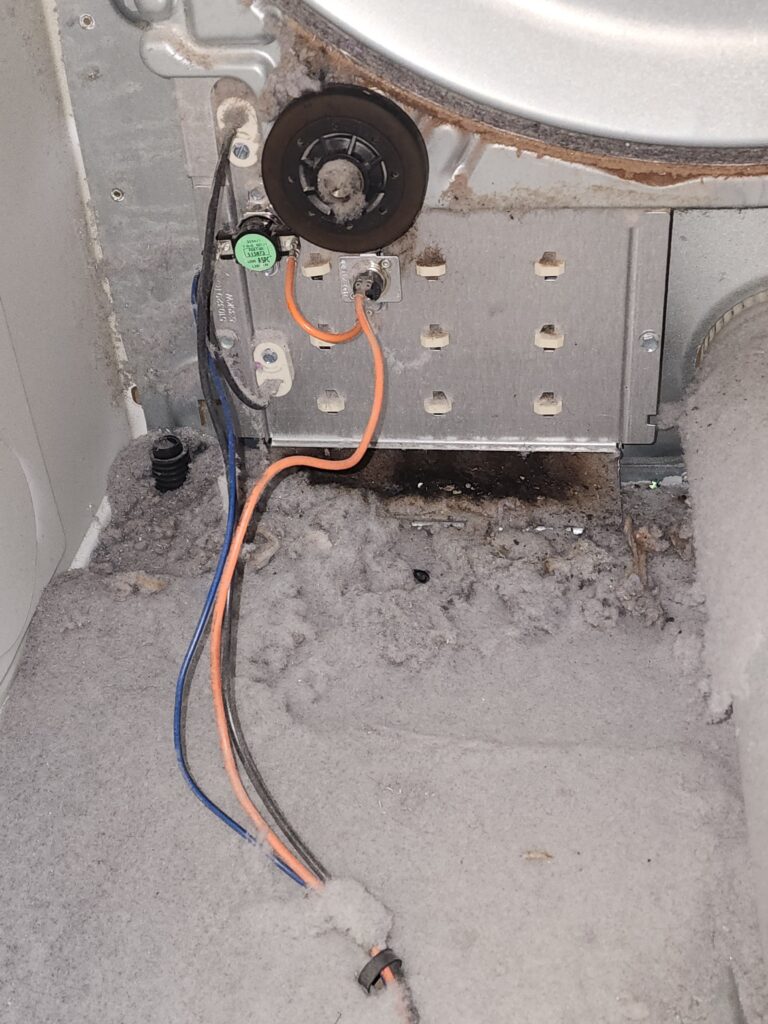
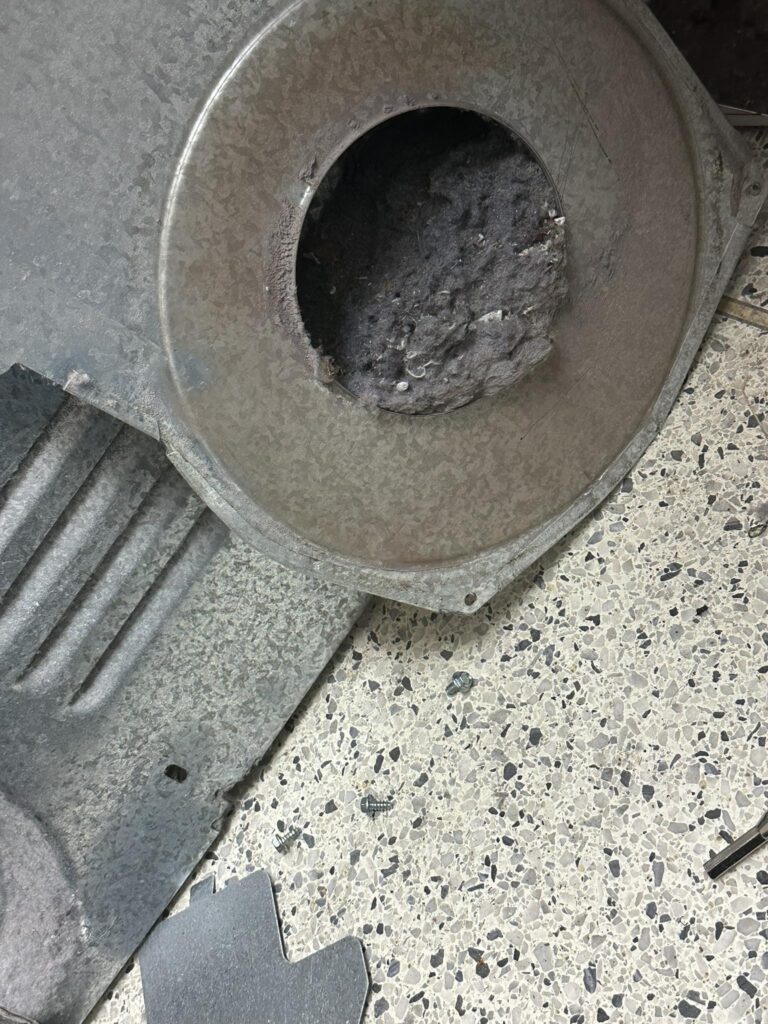
Flat-Rate Pricing -- No Surprises
STANDARD EXTERIOR WALL VENT: $150
Typical single-story home with a short, direct vent run to an exterior wall.
EXTENDED OR COMPLEX RUN: Starting at $200 -- exact price requires an on-site assessment before scheduling.
Applies to longer vent runs, multiple elbows, or multi-story installations.
ROOF TERMINATION -- NO ROOF ACCESS REQUIRED: $200
Most rooftop vents in Lubbock can be fully cleaned from inside the home using professional equipment and camera inspection. No ladder required.
ROOF ACCESS REQUIRED: Requires on-site assessment and quote before scheduling.
Price depends on roof pitch, height, and accessibility.
BUNDLE DISCOUNT: $50 off when dryer vent cleaning is scheduled together with a repair visit.
Both services must be booked at the same time -- this discount cannot be applied after arrival.
How Our Dryer Vent Cleaning in Lubbock Works
- Disconnect dryer and inspect the transition hose and connection point.
- Use professional rotary brush system to clear the vent line from inside.
- Perform camera inspection to confirm the line is clear and the termination cap is functional.
- Reconnect dryer, confirm airflow, and document the work.
You see exactly what we see. No pressure. No upsell. Just a clean vent and documentation to show it.
Upgrade Your Dryer Connection: DryerBox Installation
While we're behind your dryer cleaning the vent, we often find the transition duct -- the flexible hose connecting your dryer to the wall -- is crushed, kinked, or made of cheap vinyl. A restricted transition duct creates the same problems as a dirty vent: longer dry times, higher energy bills, and increased fire risk.
A DryerBox is a recessed dryer vent box that installs inside the wall behind your dryer. Instead of a long, looping transition duct getting crushed between the dryer and the wall, the DryerBox allows a short, direct connection. The dryer sits flush against the wall, the transition duct stays straight, and airflow stays unrestricted.
Benefits of a DryerBox installation:
- Eliminates crushed or kinked transition ducts -- the most common hidden restriction
- Allows the dryer to sit flush against the wall, saving 4-5 inches of space
- Reduces lint accumulation at the connection point
- Improves overall dryer efficiency and drying performance
- Reduces fire risk from restricted airflow behind the dryer

We also replace foil, vinyl, or damaged transition ducts with UL 2158A listed Class 0 flexible transition ducts -- the best practical option for the short connection between your dryer and the wall. Rigid metal is ideal wherever you can make it work, but in most homes there isn't enough room behind the dryer for rigid connections. Class 0 flex ducts are 100% metal or heavy multi-layer construction, non-combustible, rated to 482°F+, and approved for all dryers (gas and electric). We do NOT recommend semi-rigid duct -- even though it's technically Class 0, it crushes and kinks in the tight space behind dryers, creating the same airflow restrictions we're hired to fix. If your transition duct is foil, plastic, vinyl, or semi-rigid, we'll flag it during the vent cleaning and offer to upgrade it on the same visit.
DryerBox installation is available as an add-on to any dryer vent cleaning or dryer repair appointment. Ask us about it when you schedule your service.
If your dryer has a mechanical issue beyond the vent, we also provide full dryer repair service in Lubbock. For interior lint removal and component inspection inside the dryer cabinet, see our dryer lint cleanup and interior inspection.
Transition Duct Comparison: What Goes Behind Your Dryer
The transition duct is the short flexible connection between your dryer and the wall vent. Here's how the two most common types compare:
| Feature | Class 0 (UL 2158A Flexible) | Class 1 (Foil Laminate) | Non-Rated / Prohibited |
|---|---|---|---|
| Material | 100% metal or heavy multi-layer | Foil & scrim laminate | Plastic, vinyl, or thin unrated foil |
| Fire Safety | Non-combustible (zero flame/smoke) | Flame resistant only | Combustible -- melts, burns, or collapses under heat |
| Temp Rating | Up to 482°F+ | Typically 257°F | Not rated for dryer exhaust temperatures |
| UL Listed | Yes -- UL 2158A | Yes -- UL 2158A Class 1 | No -- not listed for dryer use |
| Durability | High; maintains shape | Lower; prone to tearing | Degrades quickly; vinyl becomes brittle |
| Code Compliant | Yes -- meets IRC/IMC requirements | Conditional -- check manufacturer manual | No -- prohibited by building code for dryer exhaust |
| Best For | All dryers (gas and electric) | Tight spaces only if manufacturer allows | Not for dryer use -- designed for bathroom exhaust fans, general ventilation, fresh air intake, hydroponics, and other non-heated applications |
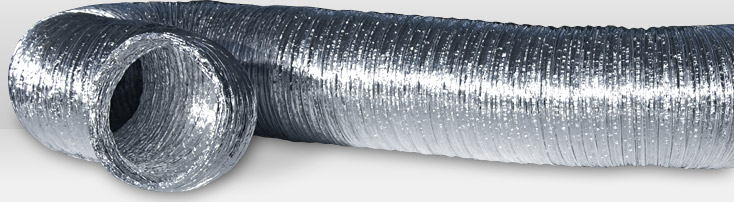
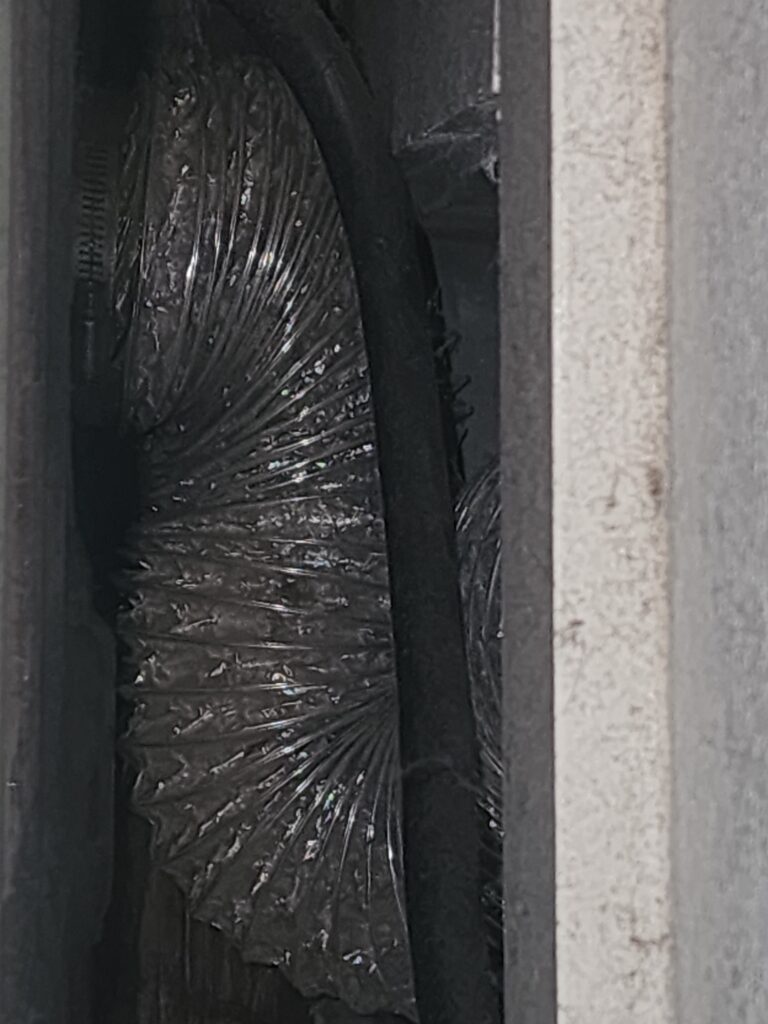
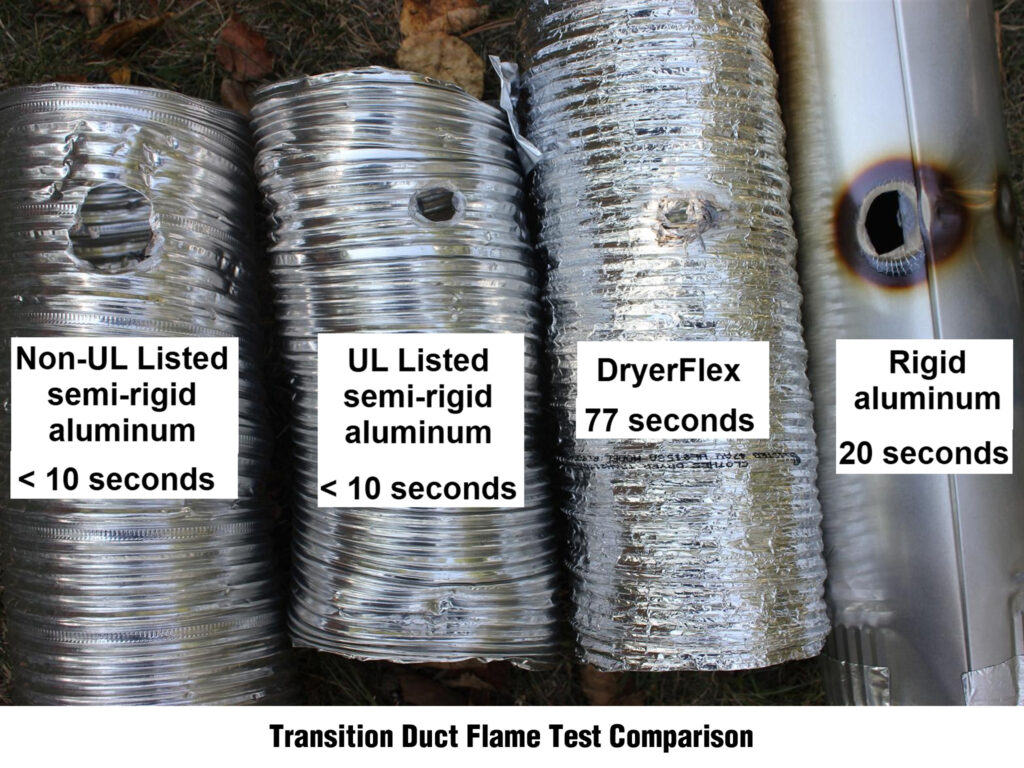
Important notes: Rigid metal duct is the ideal choice wherever you can make it work -- it's the most durable and has zero airflow resistance. But behind most dryers, there isn't enough room for rigid connections. That's where Class 0 flexible transition ducts come in. Keep the transition duct only as long as needed to make the connection from an accessible position -- think pulling the dryer out past the washer to connect, then sliding it back into place. No excess length. Many dryer manufacturers require a "heavy-duty metal" or UL 2158A listed transition duct, which effectively mandates Class 0. Always check your dryer's installation manual. We do not recommend semi-rigid duct despite it being Class 0 rated -- it crushes and kinks behind dryers, creating the same airflow restrictions we're hired to fix. We never recommend plastic, vinyl, or non-UL listed flex duct for dryer venting -- these are unsafe and prohibited by building code.
Not All Vent Products Are Made for Dryers
Walk down the ventilation aisle at any hardware store and you'll find dozens of ducts, hoods, and connectors. Most of them are designed for bathroom exhaust fans or general HVAC -- not dryers. The packaging doesn't always make that clear, and many installers don't check.
Roofers are some of the worst culprits. When a roof gets replaced and the dryer vent termination is disturbed, we frequently find it replaced with whatever bathroom fan vent cap the crew had on the truck. It fits the hole, but it's not rated for dryer exhaust temperatures.
Products commonly misused for dryer venting:
- Lightweight foil flex duct (Class 1 or unrated) -- designed for bathroom fans, not dryer exhaust. Tears easily and can't handle the heat.
- Plastic or vinyl duct -- explicitly prohibited by building code for dryer exhaust. These can melt and are a fire hazard. Never use these.
- Non-UL listed flex duct -- if it's not specifically designed and rated for dryer exhaust, it doesn't belong on a dryer.
- Snap-lock vent caps rated for bathroom fans -- they have small openings that restrict airflow, accumulate lint, and aren't built for dryer exhaust temperatures.
- General-purpose wall caps without proper backdraft dampers -- allows cold air, pests, and moisture into the vent line when the dryer isn't running.
Why this matters: Dryer exhaust reaches 125-200°F during normal operation. Products rated for bathroom fans (typically 140°F max) can degrade, restrict airflow, or create lint accumulation points over time. Plastic and vinyl duct can melt and are a genuine fire hazard.
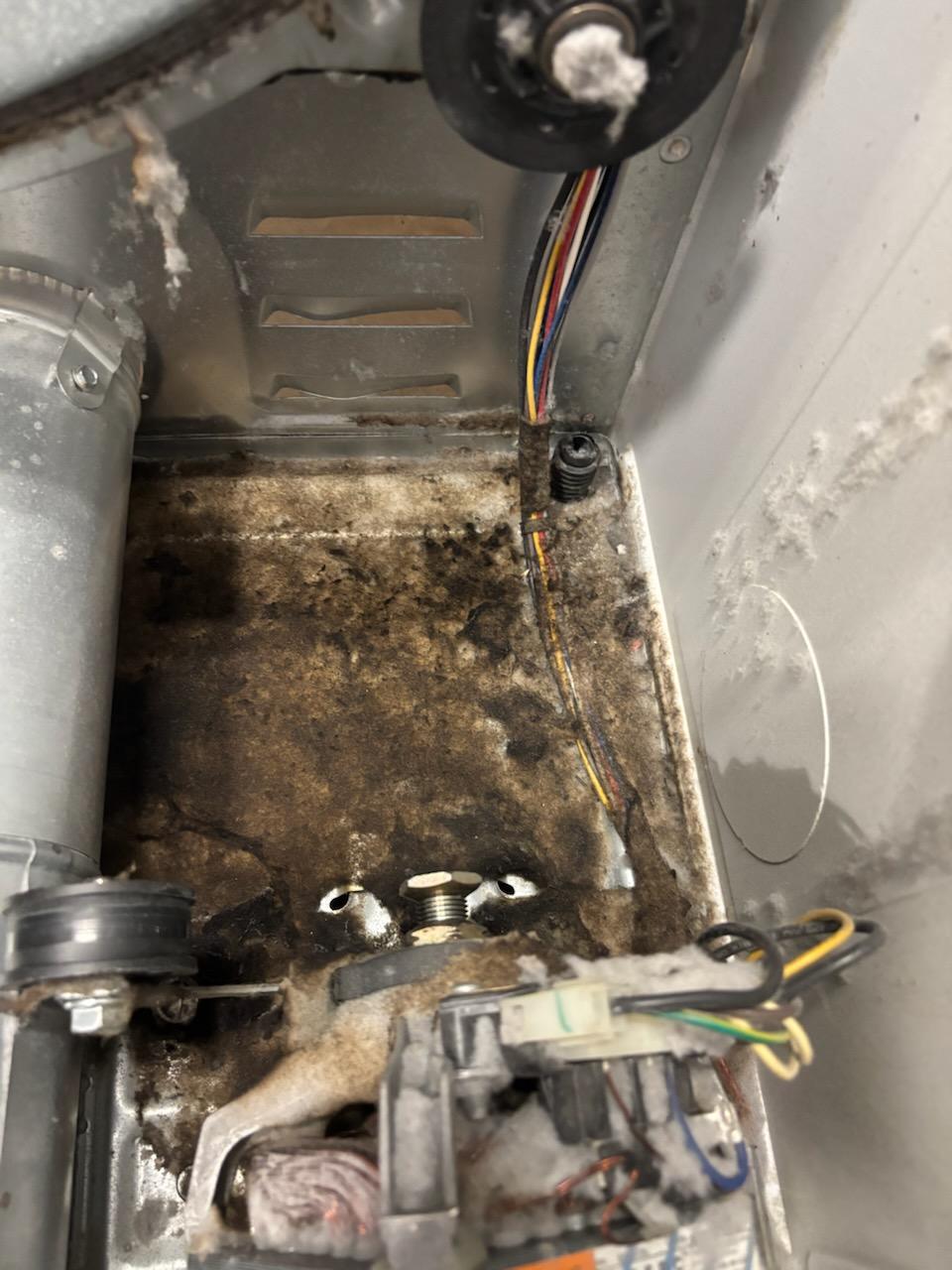
Termination caps matter too. Many cheap vent hoods sold as "dryer vent covers" are actually bathroom fan terminations. They have small openings that choke airflow and trap lint. A proper dryer vent termination has a full 4" opening with a functional backdraft damper.
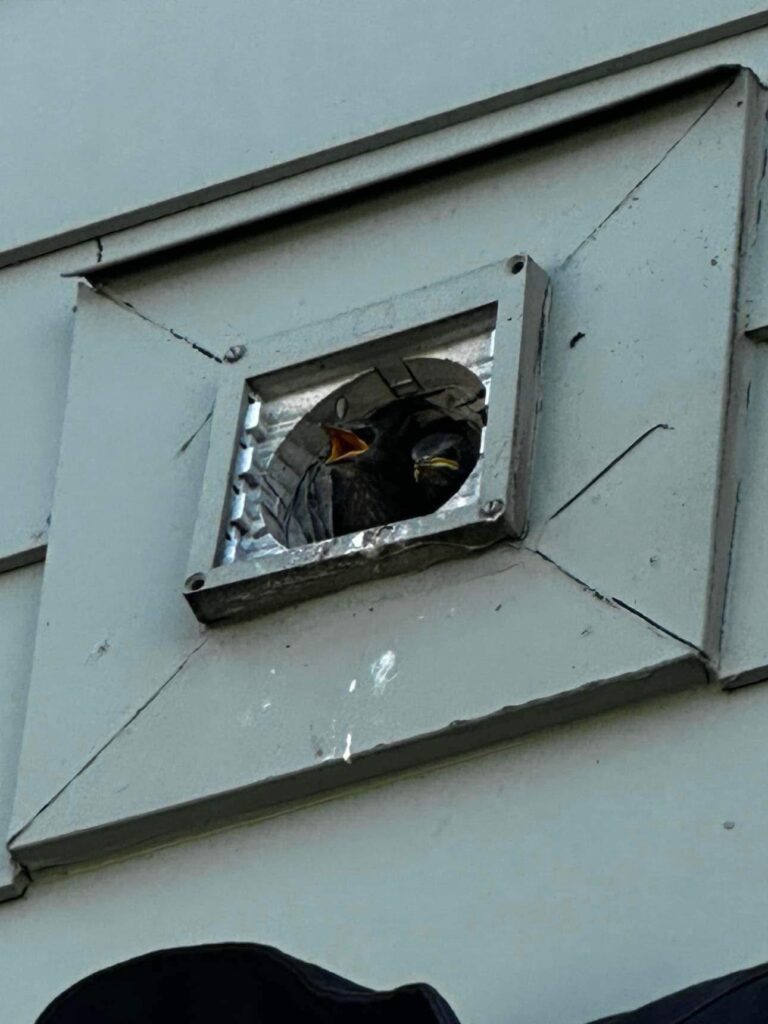
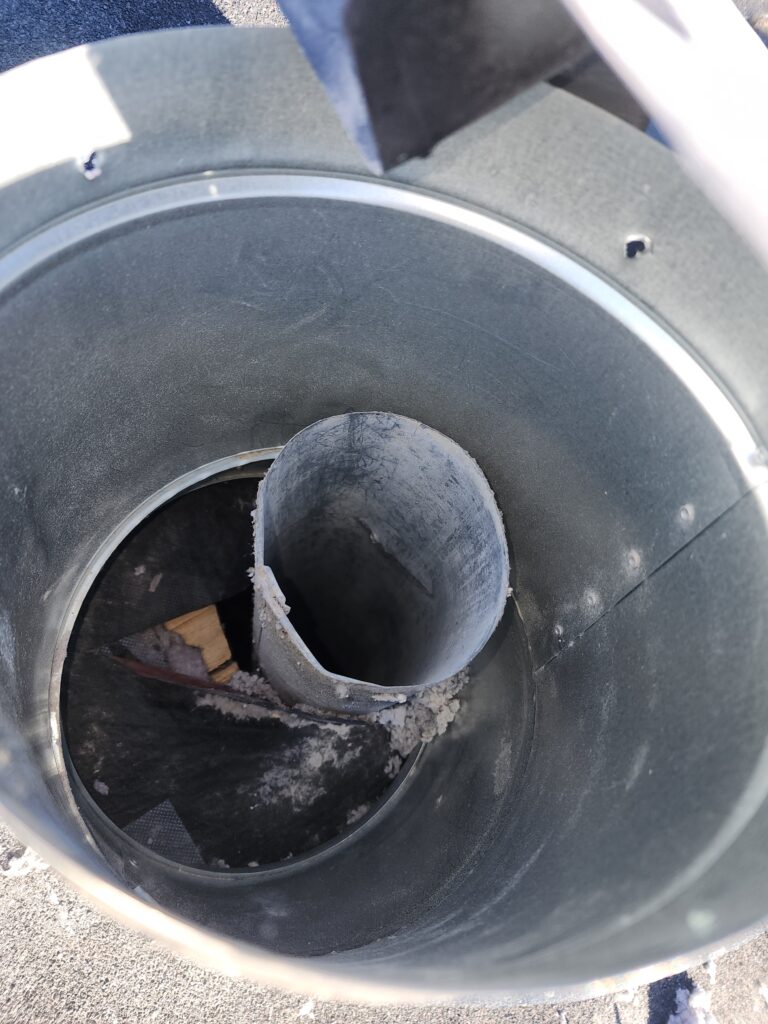
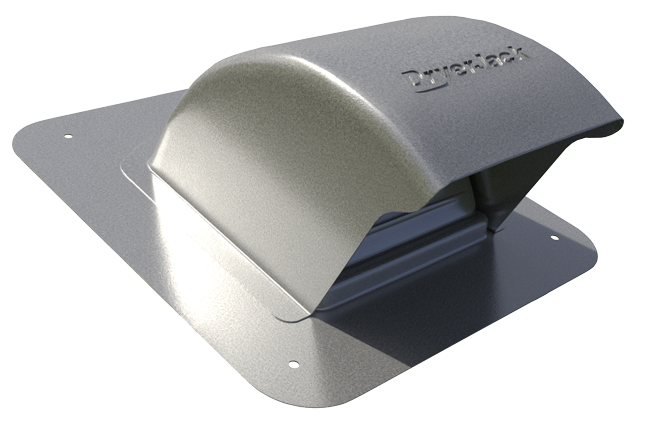
The rigid duct used in the wall, attic, or crawlspace run should always be rigid metal -- that's the right material for the permanent vent run. The flexible transition duct discussion above only applies to the short connection behind the dryer where rigid can't practically be used.
Bottom line: If your dryer vent system was installed by a general contractor, handyman, or roofer using whatever was on the shelf or on the truck, there's a good chance at least one component isn't rated for dryer use. Our vent cleaning service includes a camera inspection of the full line -- we'll flag anything that shouldn't be there and explain your options.
Wondering about repair cost? See appliance repair costs in Lubbock.
Frequently Asked Questions -- Dryer Vent Cleaning
Q: How do I know if my dryer vent needs cleaning?
A: Common signs include longer drying times, clothes that are hot to the touch after a full cycle, the dryer itself feeling very warm on the outside, or a burning smell during operation. That said, many vents need cleaning even without obvious symptoms -- annual cleaning is a reasonable standard for most households.
Q: My vent goes through the roof. Can you still clean it?
A: In most cases, yes -- and we don't need to get on your roof to do it. The majority of rooftop dryer vents in Lubbock can be fully cleaned from inside the home using professional equipment and a camera to confirm the line is clear.
Q: How is this different from using a brush kit from the hardware store?
A: DIY brush kits clean the portion of the vent you can reach, but don't address full-length blockages, compacted lint deeper in the line, or a damaged or obstructed termination cap. Professional equipment clears the entire duct, and camera inspection confirms the job is done.
Q: Do you offer any discount if I'm already having a repair done?
A: Yes. If dryer vent cleaning is scheduled at the same time as a repair visit, you save $50. Both services must be booked at the same time -- the discount can't be applied after arrival.
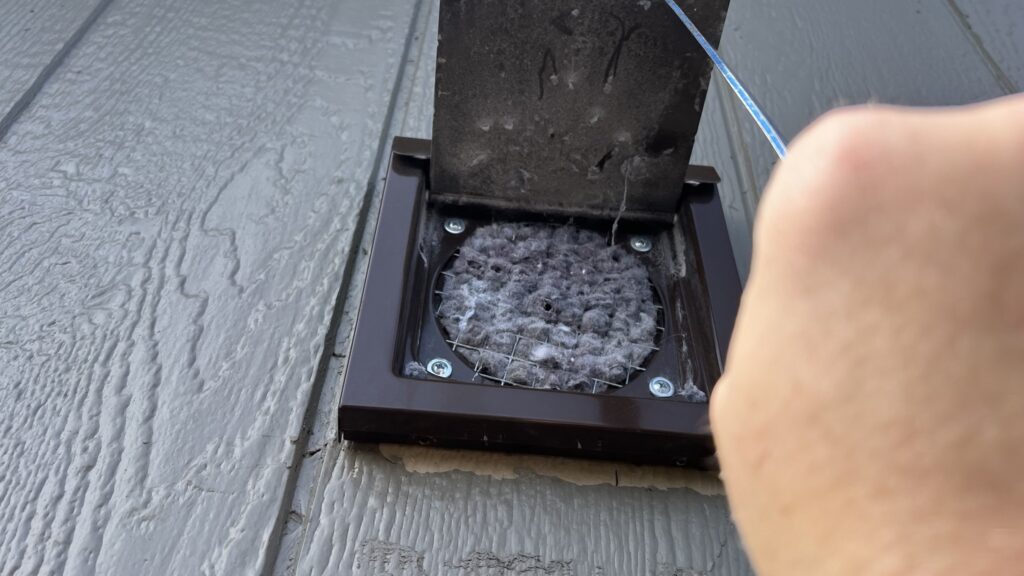
Think you can keep a dryer vent clear? Play Lint Wrangler and find out how fast lint builds up.
Not sure if your dryer issue is a vent problem or something else? Take our quick diagnostic quiz.
How Risky Is Your Vent?
Take our quick fire hazard assessment -- 9 questions, no email required.
Dryer running but no heat? A clogged vent may be the cause. See our dryer not heating troubleshooting guide.
Read our guide: How Often Should You Clean Your Dryer Vent?.
We clean dryer vents on all major brands, including Whirlpool and Maytag, LG, Samsung, GE, Frigidaire, Speed Queen, and more. If a vent cleaning appointment turns up a mechanical issue, we can diagnose and repair it the same visit.
